
If you keep getting the same pain over and over again, you are not alone. Many runners and active adults across Birmingham and Solihull come to physiotherapy because an injury seems to settle, only to return as soon as they get back to training, the gym or everyday life.
Recurring pain is frustrating. It can make you feel like you are doing something wrong, but usually the issue is more specific than that. The original injury may not have been fully rehabilitated, the load may have increased too quickly, or the way your body moves may still be placing too much stress on the same tissue.
At Achieve Health, we do not just look at where it hurts. We look at how you move, how much load your body is coping with, what happened before the injury started, and what needs to change so the pain does not keep returning.
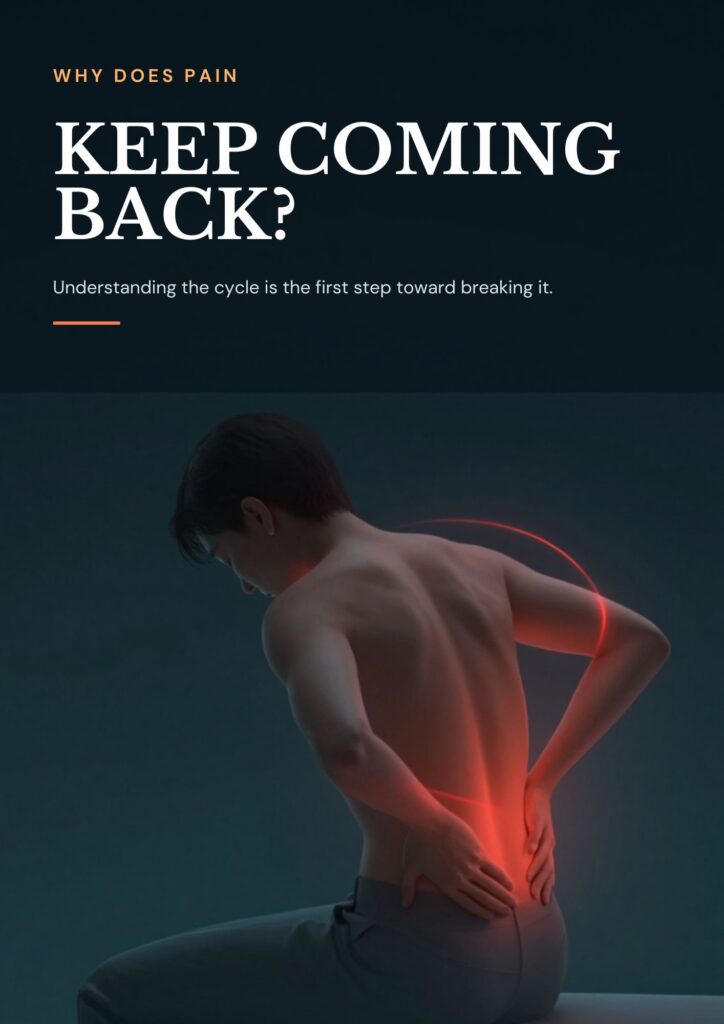
Why pain keeps coming back?
Recurring injuries are often a sign that the original problem was only partly solved. Pain may improve because you rested, reduced training or avoided the aggravating activity. But if the underlying strength deficit, load issue or movement compensation is still there, symptoms often return when normal activity starts again.
Common reasons pain keeps coming back include:
- Not fully restoring confidence in the injured tissue.
- Returning to sport too soon.
- Doing too much too quickly after a break.
- Strength and capacity not matching the demands of the activity.
- Poor movement control or compensation patterns.
- Repeated overload in the same area.
What biomechanics has to do with it?
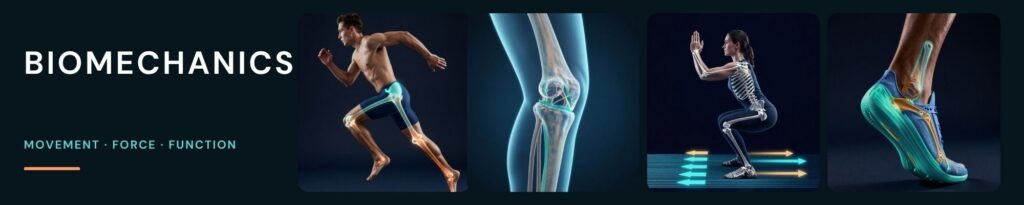
Biomechanics is simply the way your body moves and loads during activity. When someone has repeated calf pain, Achilles pain, knee pain or back pain, the way they run, squat, jump, land or twist may be increasing stress on the same structures again and again.
For runners, factors such as stride length, cadence, hip control, foot strike and landing forces can all affect how load is distributed through the body. That does not mean there is one perfect running style for everyone. It usually means the body is not yet sharing the load efficiently enough for the demands being placed on it.
At Achieve Health, we use this biomechanical lens to help explain why the same area keeps flaring up. For one person, it may be a calf that is overloaded because the hips are not contributing enough. For another, it may be the knee taking too much force because the runner is overstriding. For someone else, it may be a shoulder or back issue driven by repeated compensation.
How Achieve Health approaches recurring injuries
A big part of Achieve Health’s model is not just reducing pain — it is finding the reason the pain keeps returning. That means we look beyond symptoms and build a plan around the root cause, movement quality and training tolerance.
Our approach usually includes:
- A full assessment of the painful area and how you move.
- A review of your training, work and lifestyle load.
- Identifying compensations, weaknesses and mobility limitations.
- A progressive exercise plan that builds tissue capacity.
- Clear guidance on how to return to running, gym work or sport safely.
This matters because recurring injuries rarely improve with rest alone. They improve when the body is prepared again for the demands being placed on it. That means rebuilding strength, improving control and gradually exposing the tissue to more load in a structured way.
Why runners and active adults are especially affected
Runners and gym-goers are often caught in a cycle of “feels better, then flares up again.” That happens because pain often improves before the tissue is fully ready for the same workload.
If a runner goes from rest straight back to previous mileage, speed sessions or hills, the body may not yet have the capacity to cope. A similar pattern happens in the gym, where someone stops pressing, squatting or lunging because of pain, then returns to the same load too soon without rebuilding strength or control.
That is why recurrence is so common in active adults. The problem is not usually that exercise is bad — it is that the load needs to match the current capacity of the tissue and movement system.
What you can do now
If your pain keeps returning, the best thing you can do is stop chasing short-term relief and start asking why it is happening.
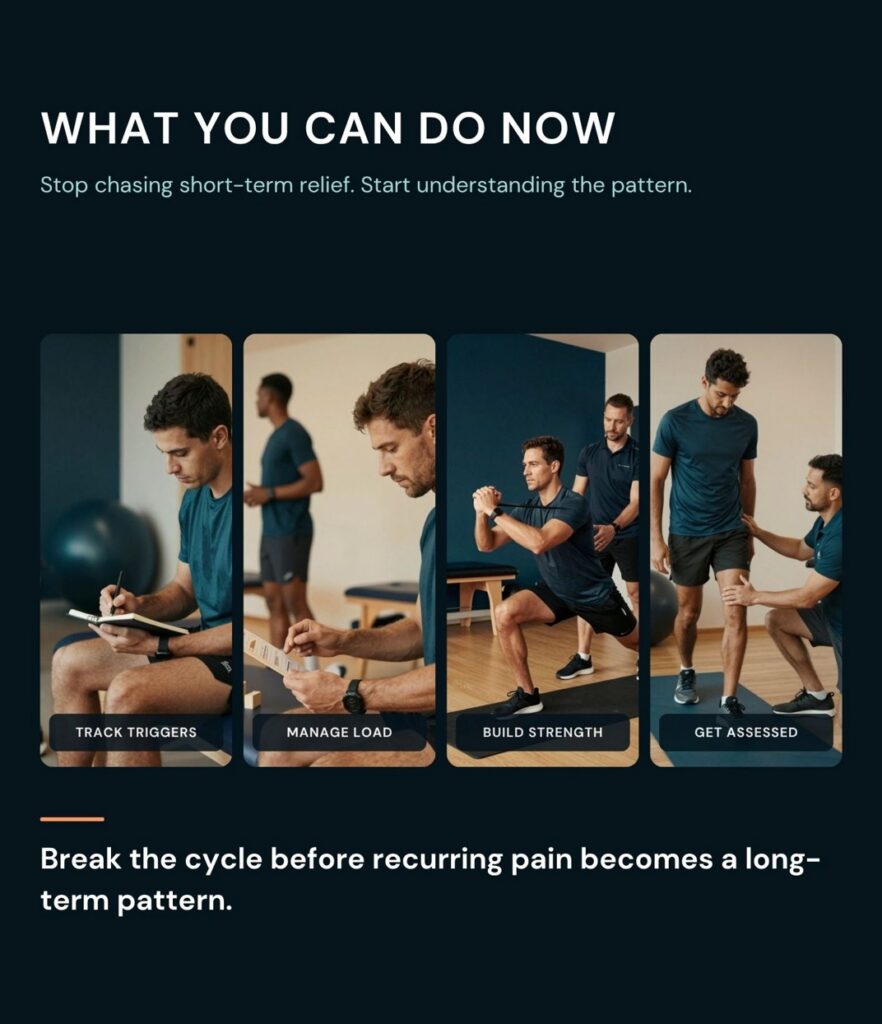
A few useful first steps are:
- Track what activities trigger symptoms.
- Notice whether pain is linked to speed, distance, volume, fatigue or certain movements.
- Reduce spikes in training load.
- Build strength gradually.
- Avoid repeatedly testing the painful movement without a plan.
- Get assessed if the same issue has already come back more than once.
If the pain is starting to affect your confidence, performance or day-to-day function, physiotherapy can help you break the cycle before it becomes a long-term pattern.
When to see a physio
You should book in if:
- The same pain keeps coming back after exercise or sport.
- Symptoms improve temporarily but return when you increase activity.
- You have had multiple injuries in the same area.
- You feel weaker, stiffer or less confident on one side.
- You do not know whether to rest, train or modify activity.
At Achieve Health, we regularly help runners and active adults across Birmingham and Solihull get to the bottom of recurring pain so they can train with more confidence and fewer setbacks.
Why choose Achieve Health
Achieve Health’s model works because it combines hands-on assessment, movement analysis, load management and exercise rehab rather than relying on a one-size-fits-all answer. That approach is especially useful for recurring injuries because the goal is not just to calm symptoms — it is to make the body more resilient to future load.
If you have been stuck in a cycle of pain that keeps returning, we can help you understand the biomechanics, the load issue and the rehab steps needed to move forward properly.
Check out this video to learn more:
Know Your Biomechanics, Reduce Your Risk of Running Injuries